The quest for morels, these wild and sought-after mushrooms, is an exciting spring adventure that requires patience and expertise. Knowing the right habitats is fundamental: morels favor deciduous forests, particularly near ash and elm trees, and appreciate disturbed or recently burned soils. Weather conditions also play a crucial role; a mix of rain and warmth can promote their growth. Experienced foragers often keep their favorite spots secret, but with perseverance and a keen eye, even a novice can hope to fill their basket with these elusive and delicate treasures.
Strategies and Techniques for an Effective Morel Hunt
5 tips for finding morels: this phrase summarizes the approach to take for a fruitful harvest. First, locate the trees: morels establish a symbiotic relationship with certain trees, notably the ash, from which they derive essential nutrients for their growth. Take an interest in the life cycle of morels; their mycelium produces fruiting bodies and spores in the spring when temperature and humidity are favorable.
Experienced morel hunters scrutinize limestone areas, where these mushrooms particularly thrive. The search can be optimized through the use of interactive maps, which help locate the best morel spots, taking into account past observations and current weather conditions. These digital tools, often shared within online communities, prove invaluable for those who know how to interpret them.
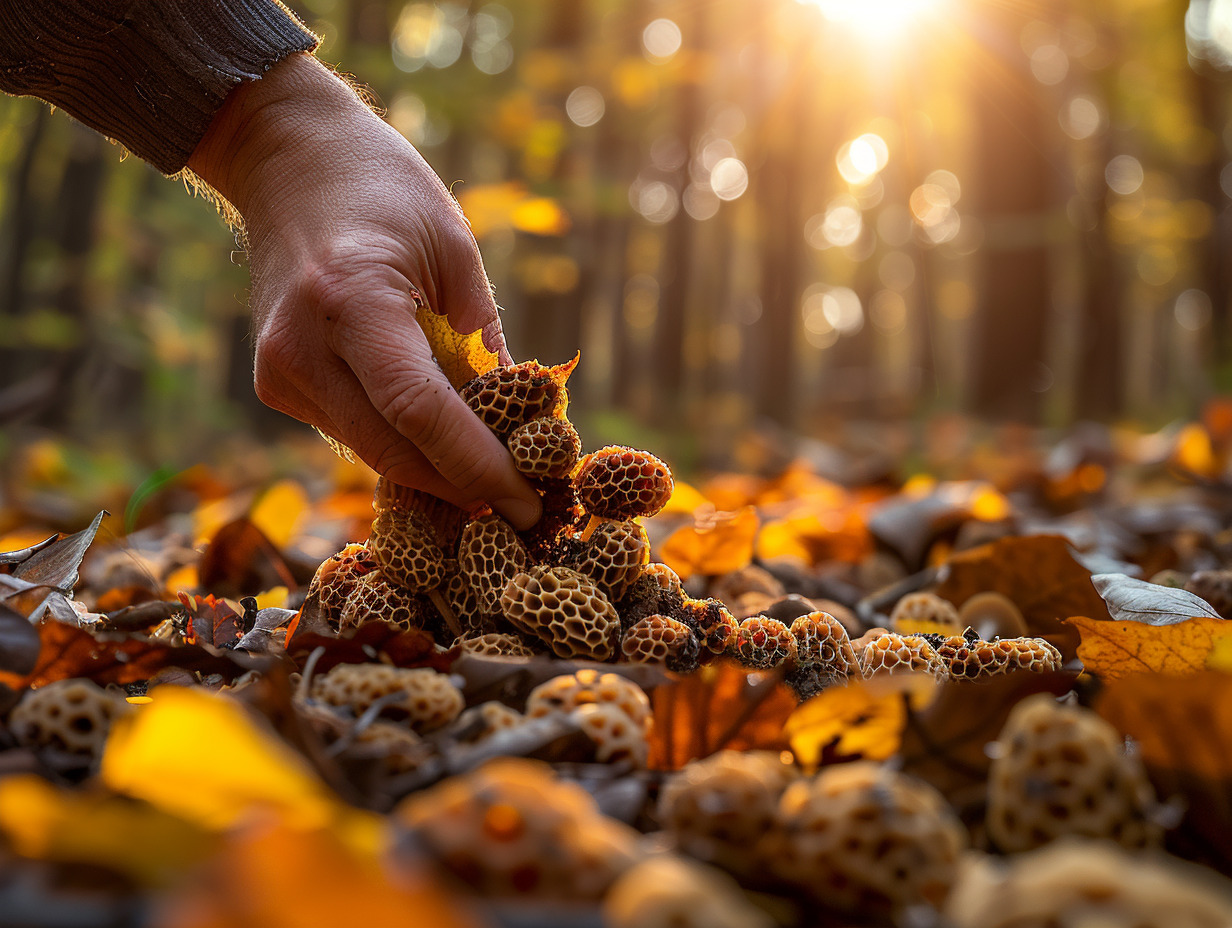
Harvesting advice is essential: morels should be picked carefully to avoid damaging the mycelium and thus allow for regrowth the following year. Remember that morels are toxic when raw and require proper cooking. Knowledge and respect for these practices ensure not only a successful harvest but also the sustainability of foraging sites for future seasons.
The Ecological and Ethical Issues of Morel Foraging
Morel foraging, a popular spring activity among many mushroom enthusiasts, raises significant ecological and ethical questions. Preserve fragile ecosystems by practicing responsible foraging. Morels, indicators of soils rich in organic matter and often associated with wetlands or old pastures, play a role in local biodiversity. Their harvesting should therefore be done with discernment to avoid disrupting this balance.
Foragers should commit to a reasoned harvest. Consider the survival of the morel mycelium; avoid completely uprooting the mushrooms and steer clear of areas where their presence is too sporadic. These practices contribute to the regeneration of morel populations and ensure the sustainability of their growth year after year.
The enthusiasm for morels has led to the emergence of communities, such as groups on social platforms, where thousands of enthusiasts exchange information. The Facebook community, with over 100,000 members dedicated to morel hunting, illustrates this collective dynamic. However, be careful that the circulation of this data does not lead to overcrowding of sensitive sites, which could result in the depletion of fungal resources.
Respect local regulations and private properties. Morels are sometimes found on lands subject to specific foraging rules or belong to private owners who may not wish for foragers on their land. A respectful and informed approach is therefore essential to maintain a sustainable and ethical practice of morel hunting.