
In the digital age where modernization is imperative to remain competitive, Human Resources departments find themselves at the heart of a revolution. Faced with the need to optimize processes, enhance employee experience, and manage data more strategically, HR leaders have everything to gain by adopting cutting-edge technological solutions. The integration of intelligent and automated systems can radically transform talent management, recruitment, ongoing training, and daily operations, leading to increased efficiency and better decision-making.
Keys to Successful Digitalization of the HR Department
Digital transformation is no longer an option for Human Resources departments; it is a necessity in the current context of accelerated work transformation. To successfully carry out this digitalization, a clear digitalization strategy must be defined that takes into account well-being at work and strengthens the company culture. By integrating digital tools such as the HRIS PeopleSpheres, employee management becomes smoother, allowing for less time-consuming administrative tracking and more targeted recruitment.
Employees are at the center of this evolution. Their involvement in the digitalization process is fundamental: participating in surveys, engaging in preparation activities, and allowing for a transition period to master new technologies. This contributes to developing employee skills, preparing them to effectively use the solutions implemented, such as Smart RH Altran, which promises to innovate in the field.
The impact of digitalization on the employer brand must also be considered. The adoption of practices such as remote work and flex office, integrated into HR solutions, showcases a company at the forefront of innovation, thus attracting talent seeking a modern and flexible work environment. The digitalization of HR encompasses both the internal improvement of processes and the external projection of an attractive and dynamic image.
Remember that any HR innovation must align with the company’s overall objectives. Digital tools, such as the digital vaults integrated by the HRIS PeopleSpheres, should serve to optimize HR management and enhance the employee experience. Consider the impact of these technologies on well-being at work and ensure that the company culture is strengthened by these changes. Digitalization should be a lever for a more human and efficient management of human resources.
Innovative Technologies Supporting HR Strategy
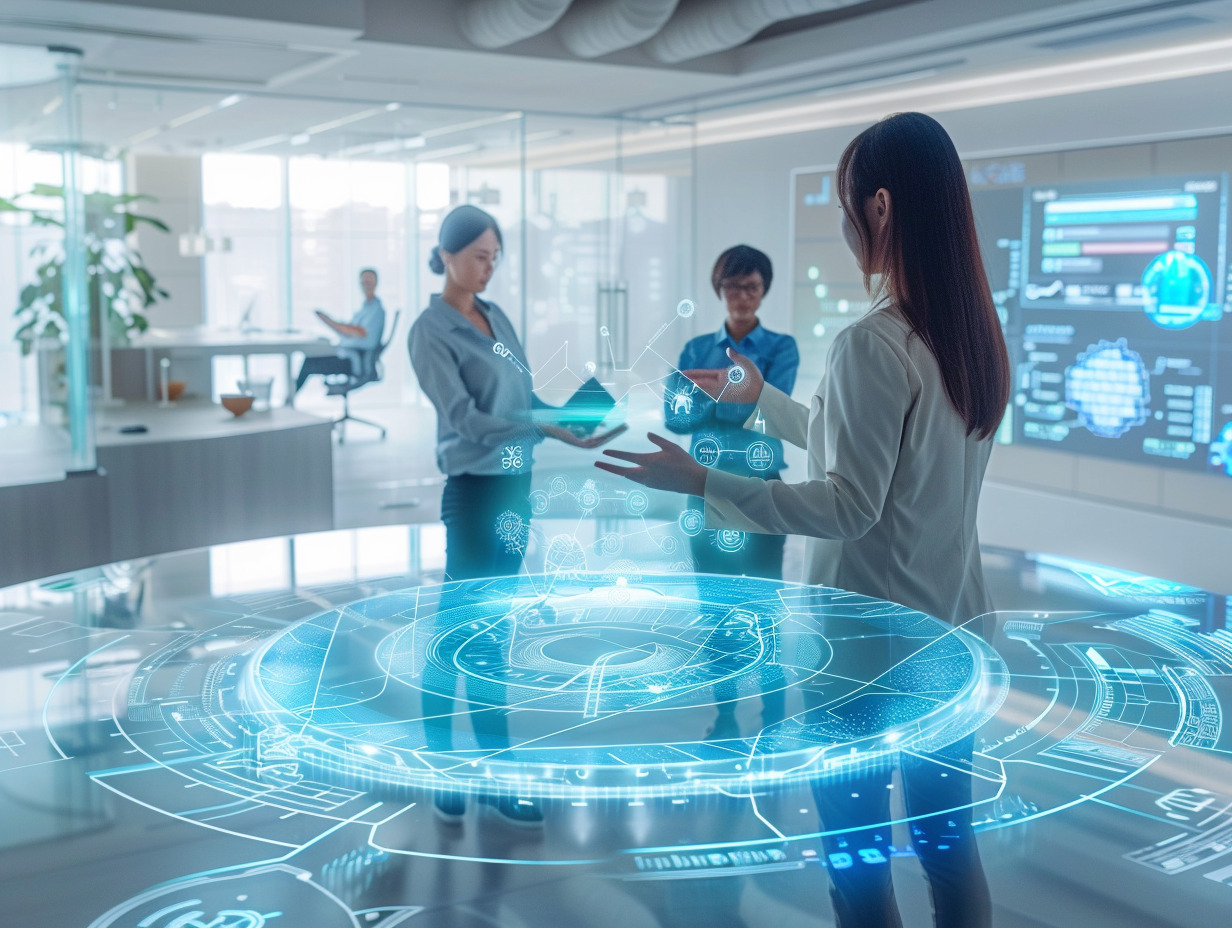
HR departments are gradually equipping themselves with innovative technologies to reshape their strategies and meet contemporary challenges. At the center of this revolution, artificial intelligence and big data are transforming daily management by providing predictive and personalized solutions. The HRIS PeopleSpheres, for example, integrates these technologies to optimize processes and allow for better analysis of employee performance data.
Beyond simple management, technological innovations are reinventing the employee journey. Online training is now a central pillar of skills development, allowing for continuous and tailored growth to individual needs. Similarly, online recruitment is refined through algorithms capable of sorting and selecting the most relevant applications, thus offering a more efficient and less biased experience.
In the realm of internal communication, digital tools are taking a prominent place. Chatbots, collaborative platforms, and enterprise social networks facilitate exchanges, strengthen the sense of belonging, and enable rapid and targeted dissemination of information. This digitalization of internal communication is an essential vector for maintaining a strong and coherent company culture in an increasingly dispersed work environment.
HR analytics is becoming essential for steering the Human Resources strategy with precision. The collected data is analyzed to provide insights into well-being at work, retention rates, and performance. This valuable information allows for real-time adjustments to HR policies and informed decision-making, ensuring a forward-looking HR management approach.