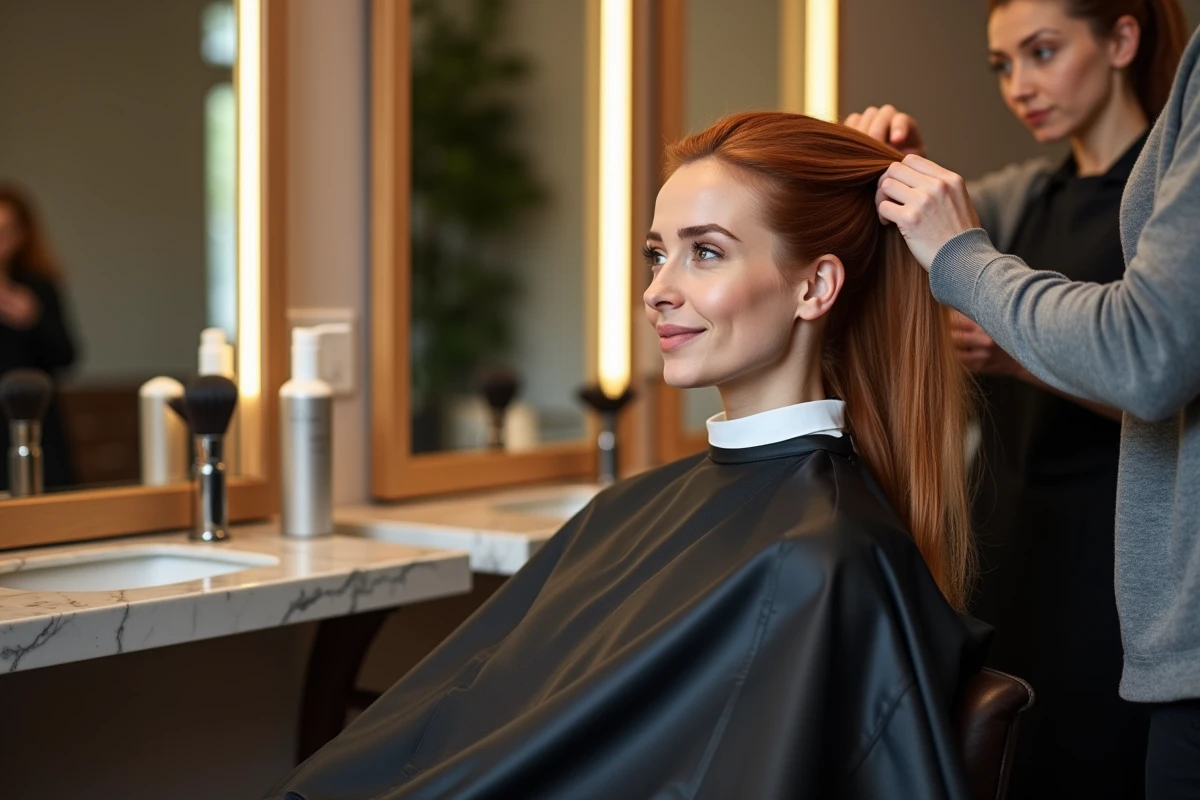
Between the textured cuts dominating the runways and increasingly targeted hair care, choosing the right hairstyle is not just about following a trend. The real question is: how do these styles adapt to the reality of each hair type, from the finest to the curliest, without compromising hold or weighing down the fiber?
Fine, curly, or frizzy hair: how texture changes the choice of a trendy hairstyle
Trendy cuts and styles (textured bob, loose waves, root volume) are almost always presented on smooth to wavy hair of medium density. Translating these styles onto fine or very curly hair requires precise adjustments, not just a change of product.
On fine hair, the main issue remains weight. A volumizing spray applied at the roots gives an immediate result, but a mask that is too rich cancels this effect within hours. Stéphane Bodin, hair stylist for Hair Rituel by Sisley, warns that overly nourishing treatments weigh down the hair and prevent the blow-dry from lasting. Therefore, the choice of pre-styling treatment determines the hold of the final style.
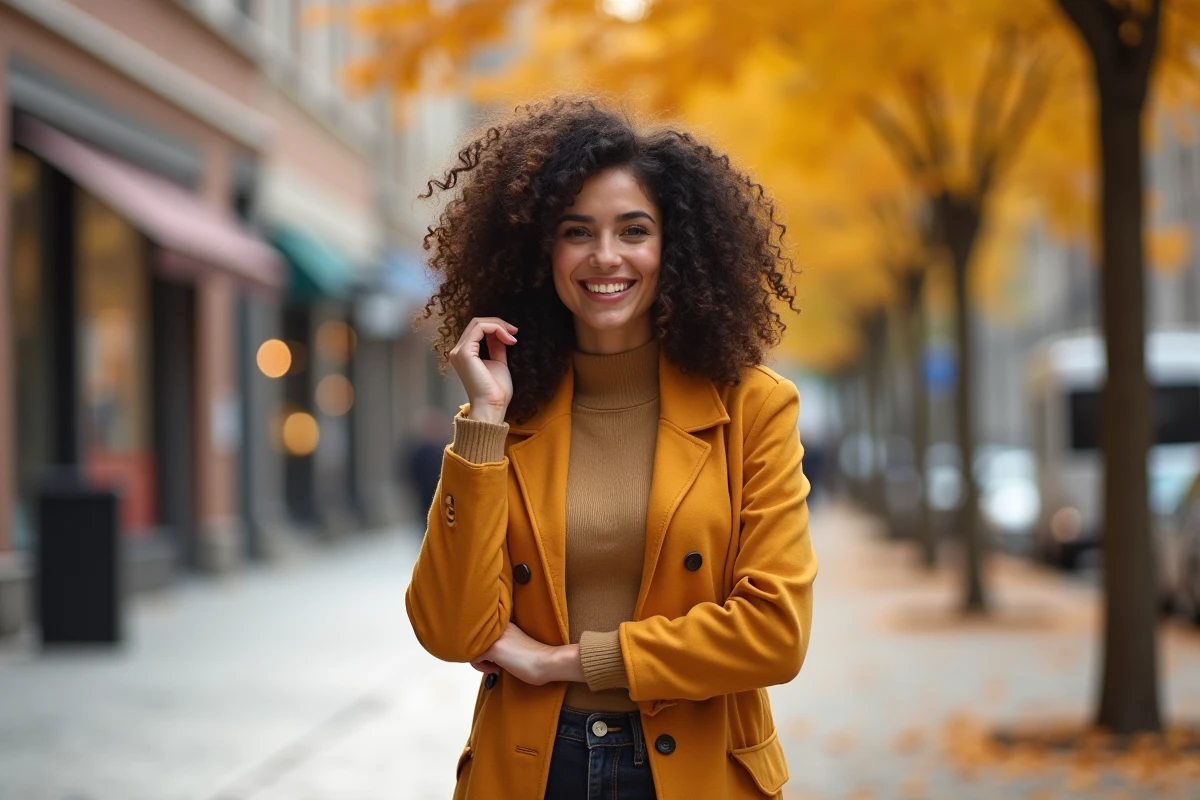
On curly or frizzy hair, the difficulty reverses: it is necessary to define the curl without stiffening it. Strong-hold gels create a cardboard effect, while lightweight creams without heavy silicones preserve movement. As regularly published by Julia the hairdresser’s blog, adapting the product’s weight to the diameter of the curl makes all the difference between a hairstyle that moves and a hairstyle that is frozen.
| Hair Type | Recommended Styling | Preferred Product | Product to Avoid |
|---|---|---|---|
| Fine and flat | Root volume, textured bob | Light volumizing spray, measured mousse | Rich mask, thick oil |
| Curly (medium curls) | Defined waves, long layered cut | Lightweight curl cream without heavy silicone | Strong-hold gel, greasy wax |
| Frizzy (tight curls) | Wash and go, twist-out, sculpted cut | Light moisturizing milk, aloe gel | Alcohol-based spray, stiff hairspray |
| Thick and smooth | Long-lasting straightening, sleek bun | Thermo-protective serum, light oil | Volumizing mousse (helmet effect) |
Hair care before styling: the steps that change the hold
Preparing the hair before styling remains the most underestimated factor. Most tutorials jump straight to the heating tool or styling product, without mentioning the preparation step that determines the durability of the result.
Detangling and pre-drying: two steps not to be reversed
Detangling before shampooing (and not after) limits mechanical breakage, especially on curly hair. Jean Louis David recommends never waiting until washing to detangle the lengths. On fine hair, this action reduces knots that create areas of artificial thickness and prevent even styling.
Pre-drying in the open air for a few minutes before using a hairdryer helps eliminate excess water without exposing the fiber to prolonged heat. On frizzy hair, this step preserves the natural definition of the curl.
The right treatment at the right time
A lightweight mask applied before washing (and not after) nourishes without weighing down. For fine hair, a leave-in spray treatment effectively replaces a classic conditioner. For curly to frizzy textures, applying a moisturizing milk on towel-dried hair, section by section, provides superior definition compared to applying the product all at once.
- For fine hair: prioritize a volumizing spray on dry roots, never on wet hair (the product slips and doesn’t hold anything).
- For curly hair: apply the styling product upside down to lift the roots and create volume without flattening the curl.
- For frizzy hair: use the “scrunching” technique (pressing the strands upwards) with a lightweight gel to set without stiffness.
Styling products and hair trends: gloss, fillers, and mists in practice
Hair fillers represent a recent category of products. Inspired by wrinkle fillers used in cosmetics, they act on the fiber by adding substance where the hair lacks density. On fine hair, the hair filler temporarily thickens the fiber without weighing it down, provided a non-occlusive silicone formula is chosen.
Hair gloss, on the other hand, deposits a reflective film on the cuticle. The result: an immediately visible mirror effect. However, on frizzy hair, this type of product can alter the perceived texture of the curl and give a permanently “wet” look that may be undesirable for some styles.
Fragrant hair mists combine two functions: they provide a veil of shine and leave a fragrant trail. Their formulation based on light alcohol makes them unsuitable for very dry or damaged hair, as they accentuate dehydration on the ends.
Heating tools and fragile hair: adapting the temperature to the type of fiber
A straightening or curling iron set to the same temperature for all hair types causes very uneven damage. Fine hair does not tolerate high temperatures well, while thick hair requires sufficient heat for the styling to hold.
- Fine or bleached hair: low temperature, quick passes. A thermo-protective product applied systematically reduces breakage.
- Curly hair wanting temporary straightening: medium temperature, fine sections. Use a fine comb behind the plate (technique recommended by several professional hairdressers) for a smoother result without having to pass multiple times.
- Frizzy or coily hair: heat must be gradual and never applied to damp hair, or it may cause thermal shock that breaks the fiber.
The choice of tool is as important as the technique. Ceramic plates distribute heat more evenly than metal plates, which limits overheating points on the strand.
Adapting a trendy hairstyle to one’s own hair texture ultimately relies on three levers: pre-styling care, the choice of styling product according to the hair diameter, and mastering the temperature of the tools. The most successful style is the one that works with the natural texture, not against it.