A parent returning home from work at 7 PM, children already absorbed by a screen, a meal eaten at odd hours: this scene repeats itself in many households. Strengthening family bonds doesn’t necessarily require vacations or exceptional outings. What makes the difference are concrete, sometimes tiny adjustments integrated into daily life.
Micro-moments of connection: the most underestimated family lever
Since the pandemic, several studies on parenting have shown that brief but intentional interactions lasting five to ten minutes protect the quality of relationships just as much as long, occasional activities. An emotional check-in after school (“Tell me one good thing and one bad thing about your day”), a ten-minute walk after dinner, a mini card game before bed: these short rituals create a regularity that children quickly adapt to.
We underestimate the power of repetition. A child who knows they will have three minutes of exclusive attention every evening eventually relies on it as a stable reference point. Very busy families can start with just one micro-moment per day, always at the same time, and observe the effects over a few weeks.
Additional resources on parenting and family life are regularly published on the Conseils Parentaux website, with approaches tailored to different family configurations.
Parental alliance and family cohesion: what traditional advice overlooks
The majority of recommendations on family bonds focus on the parent-child relationship. We talk about active listening, quality time, and kindness. All of this matters, but the quality of the alliance between parents shapes the atmosphere of the entire household.

Practically, this means regularly discussing, as a couple or co-parents, three specific topics:
- The division of tasks related to the children (homework, baths, transportation), ensuring that both adults feel supported and not overwhelmed.
- The educational rules (bedtimes, screen limits, managing conflicts between siblings), to avoid inconsistencies that create confusion for the children.
- Upcoming decisions (changing schools, extracurricular activities, vacations), agreeing beforehand before announcing anything to the children.
When children perceive a united and consistent front, their sense of security increases. Feedback varies on this point depending on family configurations (blended families, single-parent families, shared custody), but the basic principle remains the same: regular dialogue between adults reduces visible conflicts for the children.
Digital agreements in the family: going beyond simple screen limits
Limiting screen time by setting a time quota is the most common approach. It often generates tension without really improving the quality of interactions. Families that achieve better results work differently: they establish explicit digital agreements negotiated with all household members.
According to the “Families and Media 2023” report by Common Sense Media, families that implement this type of agreement report better quality conversations and fewer screen-related conflicts.
Here’s what an operational digital agreement includes:
- Phone-free zones in the house (the dining table, the children’s room after a certain hour).
- Screen-free times shared by everyone, including parents, which avoids the “do as I say, not as I do” mentality.
- Rules for responding to messages: do not reply to a text during a face-to-face conversation.
The idea is not to prohibit but to create windows where the family exists without an interface. Parents must apply the same rules for the agreement to hold over time. A child or teenager will immediately spot a double standard.

Weekly rituals and shared activities: what really works at home
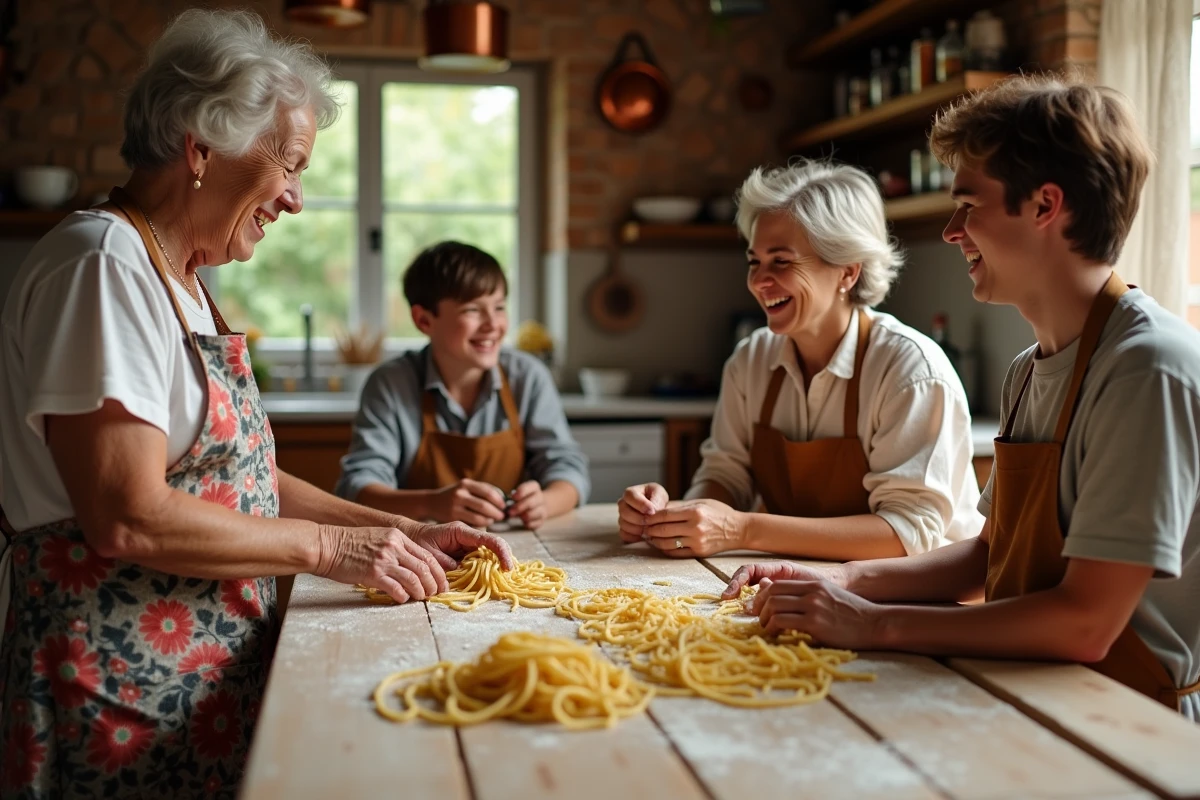
Organizing a family activity doesn’t require a budget or heavy logistics. What matters is regularity and ensuring that each member finds a role. Preparing a meal together on Sunday, with one child peeling, another measuring ingredients, and a parent supervising the cooking, creates more bonding than a trip to an amusement park where everyone runs off in different directions.
Hands-on activities at home (crafting, gardening, small DIY projects) have an often-overlooked advantage: they generate natural cooperation. You have to pass a tool, ask for an opinion, solve a problem together. Shared reading remains a powerful lever, even with older children: reading the same book and discussing it works like a family book club.
For families with seniors or distant grandparents, a weekly video call at a fixed time maintains intergenerational connections. The idea of trying new activities together (a different board game each month, for example) renews interest without complicating organization.
The common thread of all these adjustments can be summed up in one sentence: the quality of family bonds depends less on major events than on small choices repeated each week. Putting down a phone, dedicating ten minutes of full attention, aligning adults on the same rules, negotiating a digital agreement with the children. These are modest gestures, but they are the ones that, accumulated, truly change the atmosphere of a home.