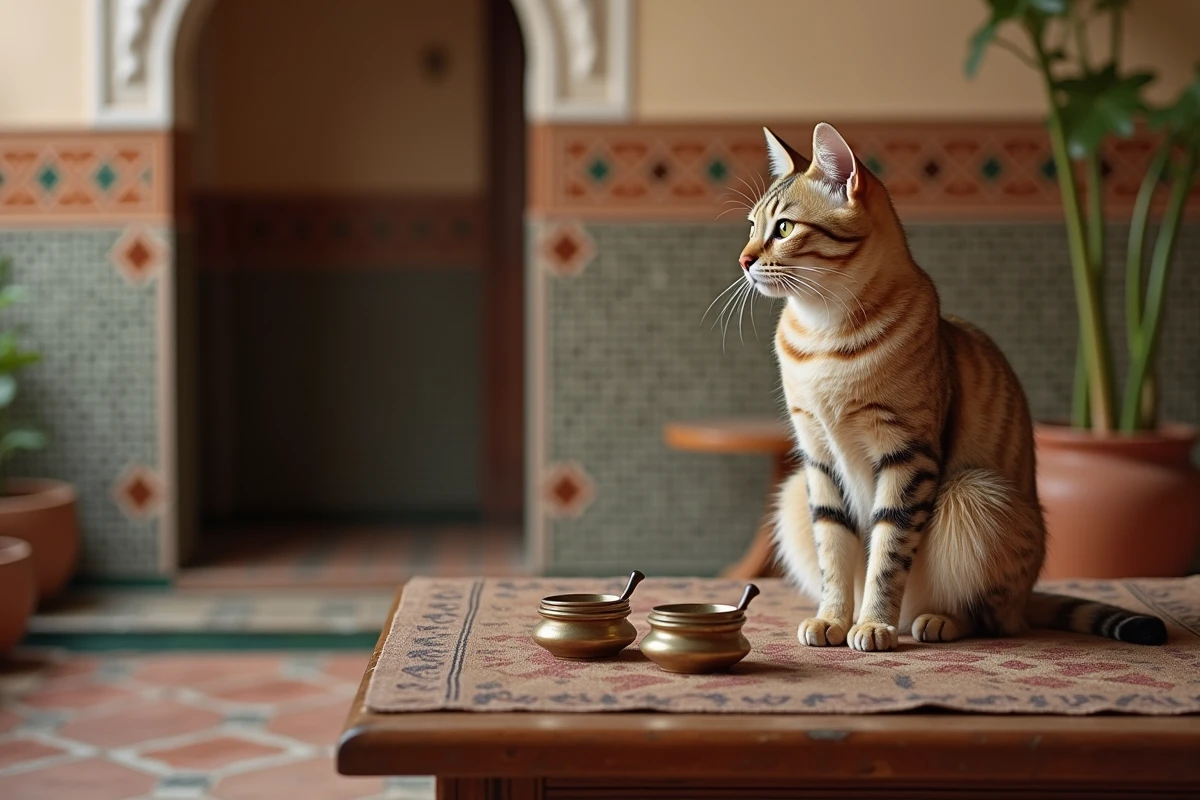
The color of a cat’s fur does not inherently carry a universal meaning. It is the belief systems unique to each culture that project values onto the animal’s coat. The beige and brown cat, with shades reminiscent of earth, sand, and wood, thus inherits interpretations related to grounding, stability, and closeness to the living, much more than to a feline symbolism specific to these hues.
Fur Color and Behavior: What Cultures Retain About Cats
Comparative research on animal symbolism shows that the cat is more often symbolized by its behavior than by its coat. Agility, independence, the ability to protect the home, the ambivalence between domestic and wild: these themes traverse eras and geographies without depending on a specific color.
The beige or brown coat then acts as an additional filter. It directs the interpretation towards earthy values, because these shades evoke soil, clay, and the fur of wild animals. A black cat activates symbolic reflexes related to mystery or magic. An orange cat evokes vitality. The cat with earthy tones, on the other hand, conjures softness and solidity.
This distinction is rarely articulated in pages discussing the symbolism of beige and brown cats, but it changes the way cultural attributions are understood: color does not create the symbol; it modulates it.
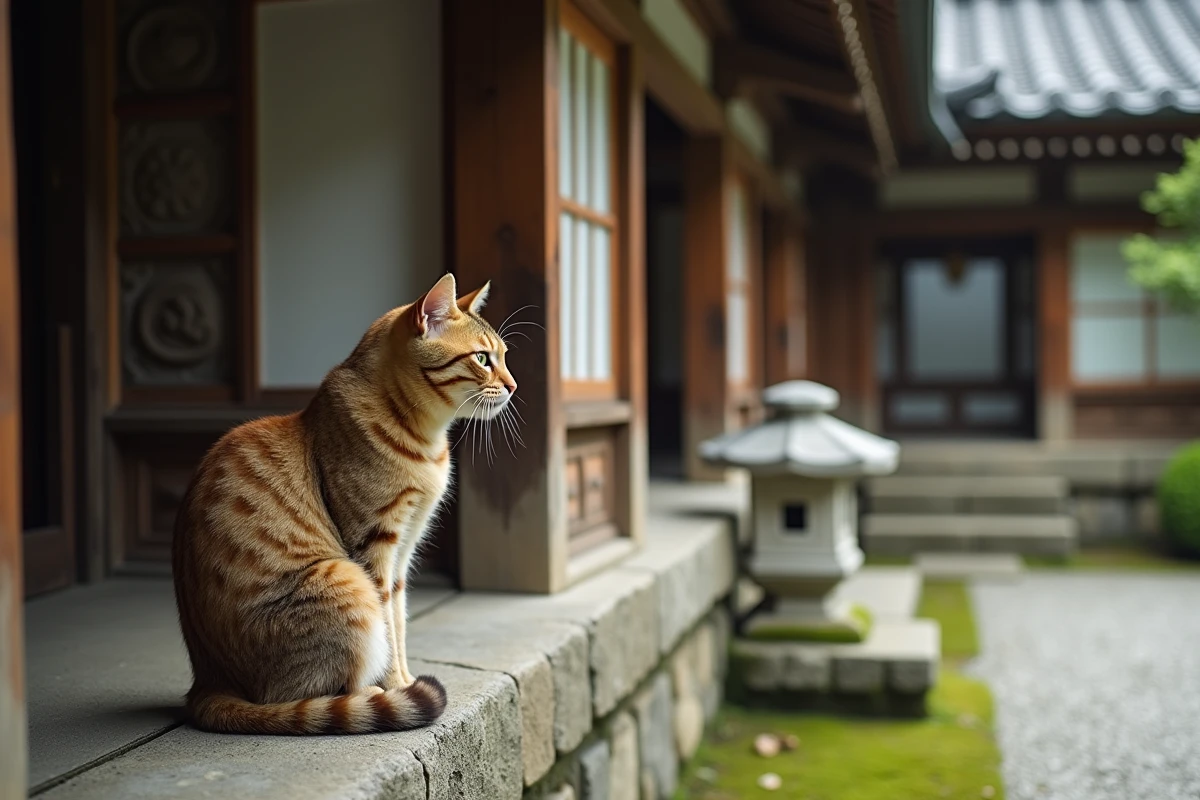
Symbolism of Earthy Cats in Eastern and Mediterranean Traditions
In Japanese tradition, the cat occupies a special place. The maneki-neko (beckoning cat) is most often depicted in white, gold, or calico. Brown and beige shades are not among the most codified variants. The Japanese symbolism of the cat relies more on the gesture (the raised paw) and the context (commerce, home) than on the shade of the fur.
In ancient Egypt, the cat was associated with the goddess Bastet, protector of the home and fertility. Artistic representations show felines in ochre, tawny, and brown tones, close to the natural colors of the African wildcat. Beige and brown join a register of domestic protection, linked to the nourishing earth of the Nile.
In Muslim tradition, the cat enjoys a generally positive status, regardless of its color. The cleanliness of the animal and its respect in religious texts take precedence over any chromatic reading. A beige or brown cat does not carry a different symbolic weight than a white or gray cat.
The Indian and African Cases
In India, the cat is sometimes linked to ambivalent figures. The color of the fur plays a minor role in mythological narratives, where it is the feline nature (predation, independence, nocturnal) that structures the symbol.
In Sub-Saharan Africa, oral traditions associate the cat with cunning and vigilance. Earthy tones are not subject to distinct codification: it is the behavior of the cat that takes precedence over its coat in most narratives.
Interpretation of Dreams About Beige and Brown Cats: Comparative Approaches
The interpretation of dreams constitutes a field where the color of the cat takes on greater significance. Several dream traditions attribute meanings related to daily life, the concrete, and trust to earthy colors.
- In contemporary Western interpretation grids, dreaming of a beige or brown cat may indicate a need for stability, a return to material concerns, or a message related to self-confidence.
- In Islam, the dream of a cat is often read through the prism of context (the cat bites, purrs, enters the house). The color adds nuance, but the behavior of the cat in the dream remains the main criterion for interpretation.
- In approaches related to intuition and spiritual development, the earthy cat symbolizes grounding and reconnection to the body, in contrast to the black cat (shadow, unconscious) or white cat (purity, elevated spirituality).
The dreamer who sees a beige cat receives, according to these readings, a message oriented towards concrete life: home security, relational qualities, trust in daily life. The meaning varies depending on whether the dreamer is male or female in certain traditions, but this distinction remains anecdotal compared to the broader cultural framework.

Beige and Brown Cats in Contemporary Symbolism
Recent interpretations increasingly value the earthy-toned cat as an image of softness and closeness to the living. This trend is part of a broader movement to revalue natural colors, far from binary symbolisms (black/white, good luck/bad luck).
Beige and brown do not carry negative connotations in European superstitions, unlike black, which has long been associated with witchcraft. This relative neutrality allows cat owners to project positive qualities onto their animal without cumbersome folkloric heritage.
The contemporary symbolism of the beige cat revolves around a few recurring axes:
- Emotional stability and reliability, by association with earthy colors.
- Warmth and comfort, because beige and brown evoke wood, home, and natural materials.
- Authenticity, in an era where “raw” colors are perceived as closer to the living than bright or artificial shades.
This framework remains a cultural construction. No ancient tradition specifically distinguishes the beige cat from the brown cat in its symbolic system. The nuance is modern, driven by online communities and personal development approaches that associate color, energy, and spiritual message.
Thus, the beige and brown cat inherits a dual status: an ordinary domestic animal in most traditions, and a support for symbolic projection in contemporary readings. The earthy coat does not create the symbol; it serves as a surface for values that each culture already attributed to the cat before looking at the color of its fur.