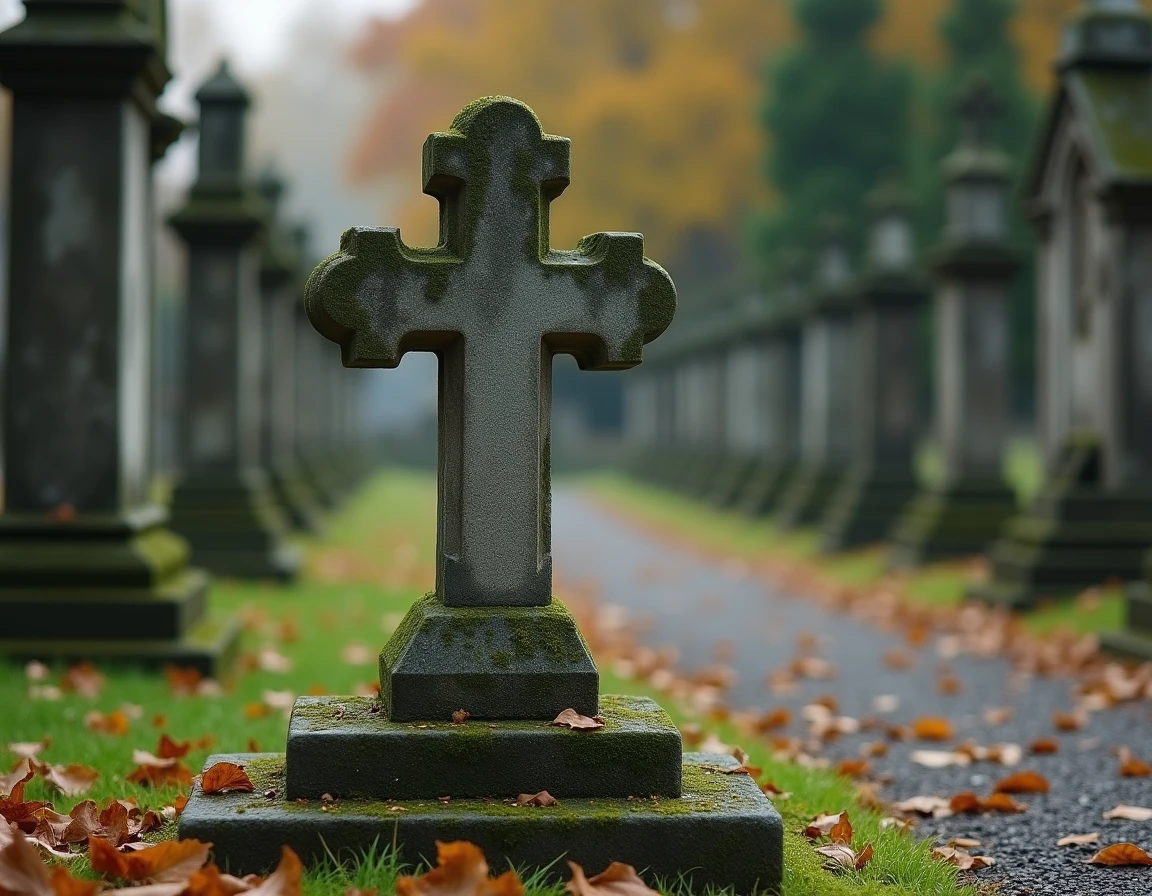
When a loved one passes away, the question of marking the grave arises quickly. The funeral cross on a grave remains the most common visual marker in French cemeteries. It signifies a place of reflection, carries a strong symbolic weight, and responds to technical constraints often unknown to families.
Funeral Cross and Cemetery Regulations: What the Town Hall Can Refuse
Before taking any steps, the first reflex is to consult the cemetery’s internal regulations. Each municipality sets its own rules regarding the dimensions, allowed materials, and the placement of the cross on the plot.
Some municipalities impose a maximum height to prevent the cross from exceeding neighboring graves. Others prohibit certain materials deemed unstable or not in line with the site’s aesthetics. In religious sections or spaces dedicated to secularism, the installation of a cross may be outright refused.
Failure to comply with the regulations can lead to a formal notice, or even the removal of the cross by the municipality. Families wishing to place a funeral cross on a grave should request a copy of the regulations from the town hall before ordering anything.
A point rarely anticipated: in the case of an old family plot, the municipality may require that the new cross meets updated standards, even if the old cross, installed decades ago, did not comply.
Legal Responsibility in Case of Poorly Fixed Cross on a Grave
Have you ever noticed a leaning or loose cross in an old cemetery? Beyond the visual aspect, it’s a real safety issue. A falling cross can injure a visitor, raising questions of liability.
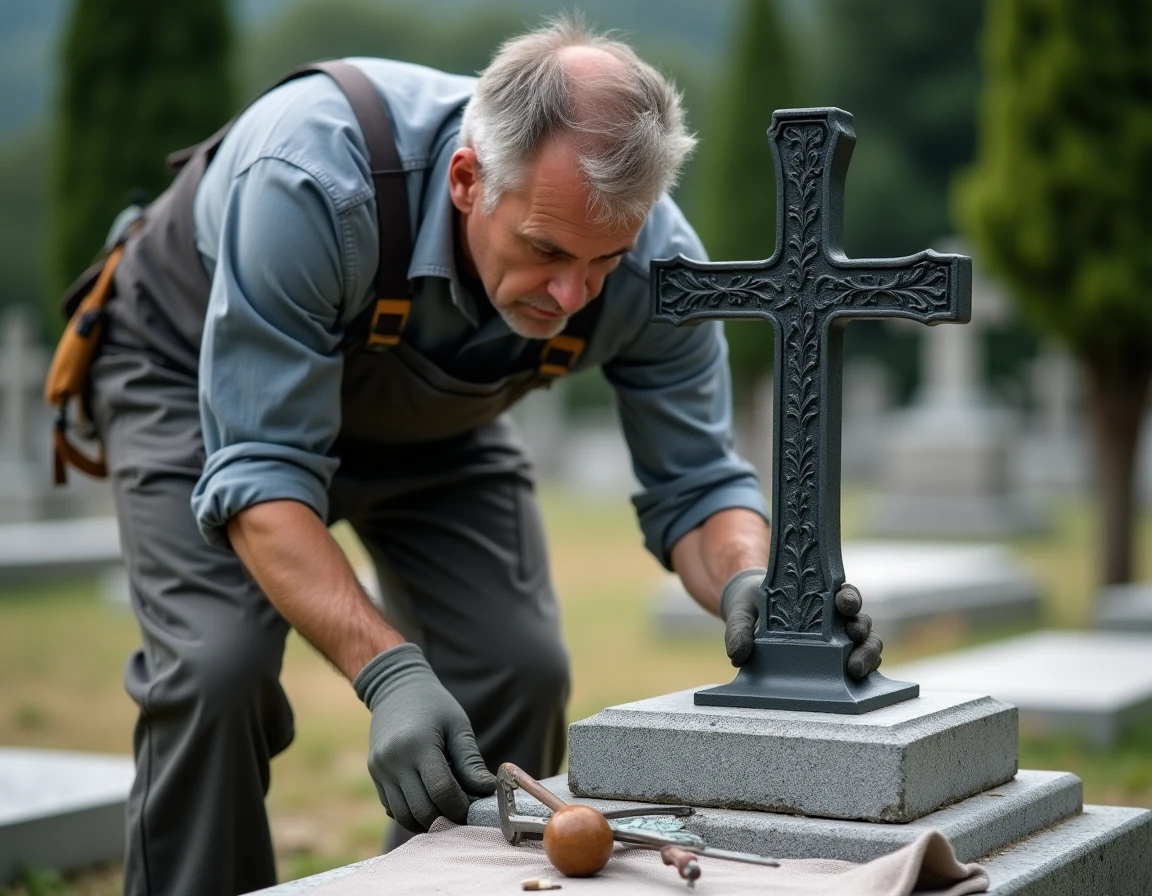
The holder of the plot is responsible for the maintenance of their grave, including the cross. If a fixation defect causes an accident, the family may be held liable. That’s why hiring a professional stonemason for the installation is not a luxury, but a legal precaution.
The fixation method varies depending on the support. On a granite slab, chemical anchoring is the most common method. On a burial plot, a buried concrete base ensures stability. The type of soil and the weight of the cross determine the installation technique, not the other way around.
Funeral Cross Materials: Real Durability Depending on Climate
The choice of material is not solely aesthetic. It depends on the local climate, the frequency of maintenance the family can provide, and the available budget.
Granite and Natural Stone
Granite withstands frost, acid rain, and temperature variations very well. It is the most durable material for a cross intended to remain in place for decades. Limestone, on the other hand, degrades more quickly in humid regions.
Wood and Cast Iron
Untreated wood is suitable for a temporary cross, placed in the days following the burial while waiting for the permanent monument. Cast iron withstands moisture well but rusts without regular maintenance. An anti-rust treatment applied annually extends its lifespan.
Stainless Steel and Resin
Stainless steel offers a contemporary look and requires little maintenance. Resin, being lighter, allows for varied shapes but does not age as well under prolonged UV exposure.
- By the sea or in areas exposed to salty winds, prefer granite or stainless steel that resist corrosion.
- In mountainous areas, avoid limestone and untreated wood, which are sensitive to repeated freeze/thaw cycles.
- In urban areas with air pollution, polished granite is easier to clean than raw stone.
Family Plot and Continuity of Cross Design
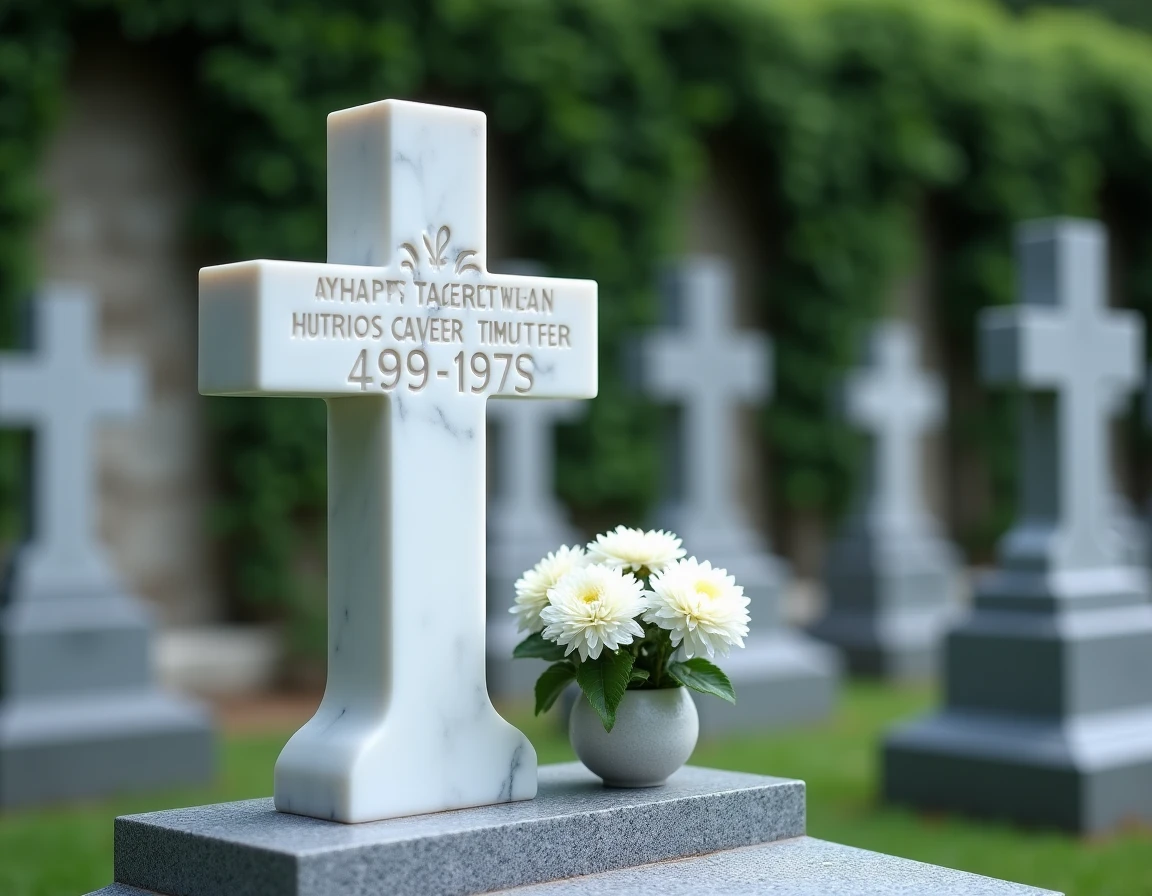
On a family grave hosting several deceased, the choice of cross is not always free. Why this constraint? Because the family often adopted a specific model generations ago, and current relatives wish to maintain visual coherence.
This continuity is based on family agreements, not regulations. No text requires reproducing the original cross. In practice, changing styles on a shared plot can create tensions among heirs.
When the original model is no longer manufactured, a stonemason may offer a close reproduction. The cost depends on the complexity of the engraving and the original material.
Cross with QR Code: Digital Memory in the Cemetery
Several funeral service providers now offer crosses that incorporate a QR code engraved or affixed to a plaque. By scanning it with a phone, visitors can access an online memorial space: photos, texts, videos, guest book.
This option is particularly appealing to families geographically dispersed. A relative living abroad can view and contribute to the memorial space without visiting the cemetery.
The QR code typically appears as a ceramic or metal disc, glued or embedded in the cross. Its durability depends on the support and exposure to the elements.
- Check that the cemetery regulations allow this type of addition to the grave.
- Ensure that the associated online service provides long-term data hosting.
- Plan for shared access among several family members for content management.
The choice of a funeral cross engages the family on symbolic, technical, and sometimes legal levels. Consulting the cemetery regulations and having the cross installed by a professional remains the best way to avoid complications after the burial. The material, fixation, and style deserve as much attention as the inscription engraved on the stone.