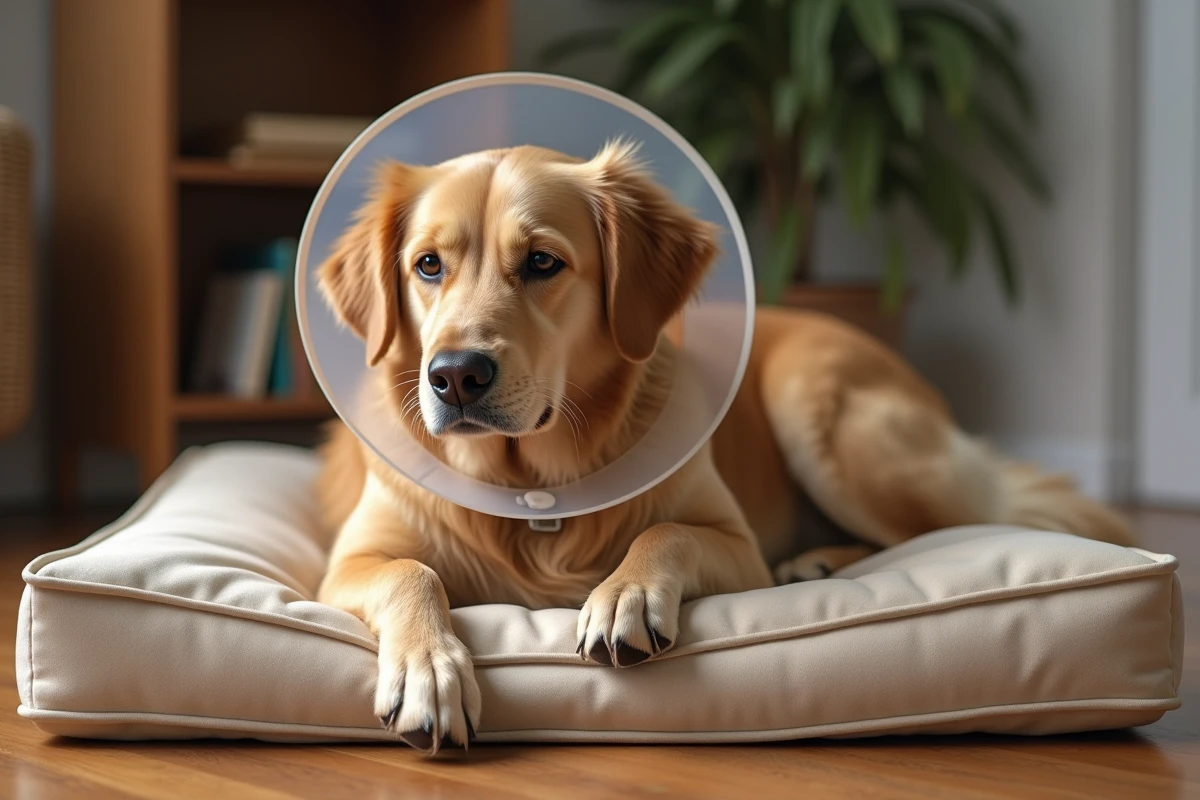
Your dog comes back from the vet with an Elizabethan collar, and within minutes at home, he bumps into furniture, refuses to drink, and looks at you with a downcast expression. This scene is shared by the vast majority of owners after surgery. The collar protects the surgical wound, but it also disrupts the animal’s spatial awareness.
However, a few concrete adjustments in the environment and daily routine can make this period much more bearable for both him and you.
Sleep Disrupted by the Collar: An Underestimated Problem in Dogs
Have you noticed that your dog keeps changing positions at night with his collar on? It’s not just a whim. A clinical study published in 2024 by Newman et al. in the Journal of Veterinary Behavior showed that rigid collars significantly disrupt a dog’s sleep: more frequent nighttime awakenings, marked restlessness, and difficulty finding a comfortable position.
Lack of sleep slows recovery after surgery. A tired dog is also more irritable and more likely to rub against walls in an attempt to remove his collar.
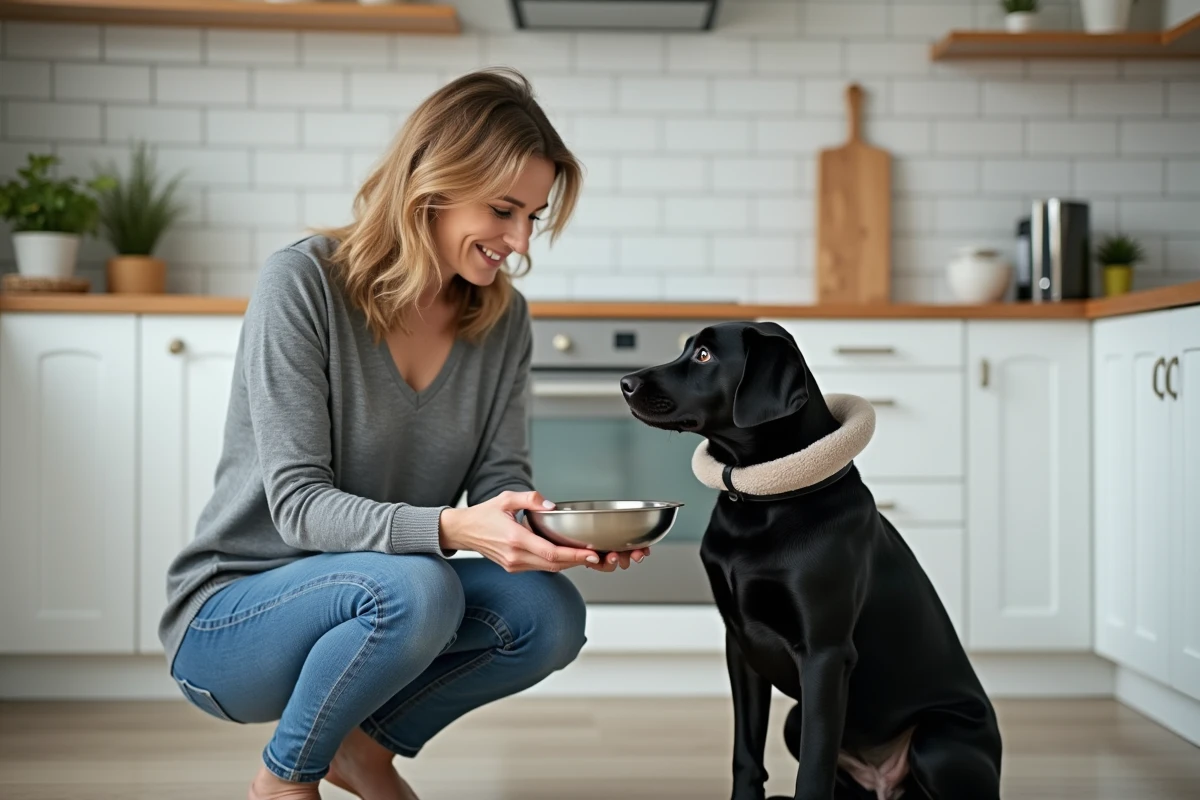
Soft or inflatable collars reduce these disturbances without increasing the complication rate at the wound site, provided the owner is well-informed about follow-up care. Before changing models, confirm with your veterinarian: depending on the location of the wound, a soft collar may not always protect as well as a rigid cone. Knowing how to manage a dog with a collar on a daily basis starts with choosing the right equipment for your animal’s situation.
Adapting the Indoor Space for a Dog with a Collar
The collar expands your dog’s size by about twenty centimeters on each side. He loses his usual spatial references. An observational study published in 2023 documented a significant increase in falls down stairs and collisions with furniture in older or arthritic dogs wearing a rigid collar.
Here are the adjustments to implement as soon as you return from the clinic:
- Block access to stairs with a safety gate, especially in the first few days when the dog is still under the residual effects of anesthesia.
- Clear hallways and narrow passages by temporarily removing objects from the floor (shoes, baskets, toys) so that the collar doesn’t get caught anywhere.
- Place the bedding in a quiet corner against a wall so that the dog can lean against it and not be disturbed by the comings and goings of the household.
- Elevate the food and water bowls: a chest-height support makes access easier with the collar and prevents the dog from spilling everything by lowering his head.
These precautions are simple, but they significantly reduce the animal’s stress. A dog that constantly bumps into things will eventually associate the collar with a source of anxiety, complicating the entire recovery process.
Collar and Outings: Adapting Walks After Surgery
The temptation to eliminate outings is common. The dog is wearing a collar, has just been operated on, and keeping him indoors seems safer. In reality, short outings on a short leash speed up recovery by maintaining a minimum level of muscle tone and allowing the dog to relieve himself without stress.
Adjust the duration and route. Favor flat terrain, avoiding narrow passages between cars or poles where the collar might get stuck. Five to ten minutes are sufficient in the first few days.
Managing Interactions with Other Dogs
A dog with a collar is vulnerable. He perceives his surroundings less well and cannot communicate normally with other dogs. Avoid dog parks and peak hours. If another dog approaches, position yourself between the two. The collar alters the dog’s body language, which can provoke unpredictable reactions from the other animal.
Duration of Collar Use After Neutering or Surgery
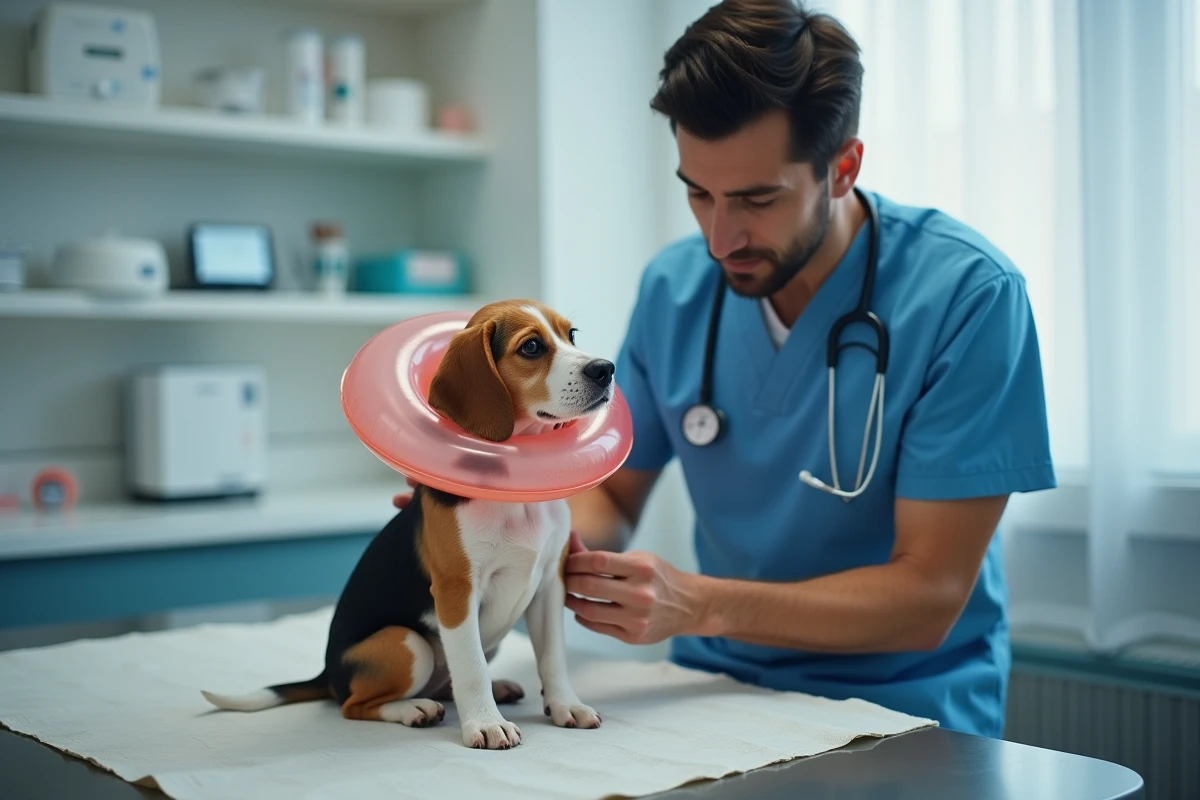
The question always arises: how long should the collar be kept on? The answer depends on the type of procedure and your dog’s individual healing.
Data published in 2025 by Vettorato et al. in Veterinary Record Open show a recent trend in some European university veterinary hospitals: the duration of use is tailored on a case-by-case basis through teleconsultation follow-up. Owners send photos or videos of the wound, and the veterinarian decides on removal based on the actual healing progress.
This protocol mainly concerns standard neuterings in healthy young dogs. For more extensive surgeries (mass removal, orthopedic surgery), the collar is generally kept on longer and follow-up is more frequent.
Signs That Justify Contacting Your Veterinarian
Never remove the collar on your own initiative thinking the wound “looks fine.” Some complications arise beneath the surface. Contact the clinic if you observe:
- Swelling or redness extending around the suture after the first few days.
- Abnormal discharge (pus, colored or foul-smelling liquid) at the wound site.
- A dog that refuses to eat for more than twenty-four hours after returning home.
Premature removal of the collar remains the leading cause of avoidable post-operative complications. Even if your dog seems to no longer touch his wound, a moment of inattention is enough for him to tear out stitches.
The recovery period with a collar rarely lasts more than two weeks for common surgeries. By adapting the space, adjusting outings, and monitoring healing with your veterinarian, you can turn these few difficult days into a manageable interlude. The collar remains the most reliable tool for protecting a surgical wound, provided it is not removed too early.